
The Multiplication of Awe: The Practice and Power of Nature Journaling, Curiosity, and Community
Written by Theresa Ho, Yosemite Nature Journaling Group
Welcome to Notes from the Sierra: a monthly offering born from the voices within our own community.
This series is a space for the wisdom of lived experience, the elemental insights that shape our work, and the inspiration we draw from the mountains, forests, and beyond. Each month, someone from our teaching, guiding, or creative circles will share a reflection—a story, a lesson, a moment of relationship with nature or Self.
The only parameters we offer: make it honest. Make it from the heart. Make it real. Rooted in place, shared in the spirit of connection.
After taking a brief hiatus in June as our programming season picked up, we’re excited to be back with July’s entry—courtesy of Theresa Ho!
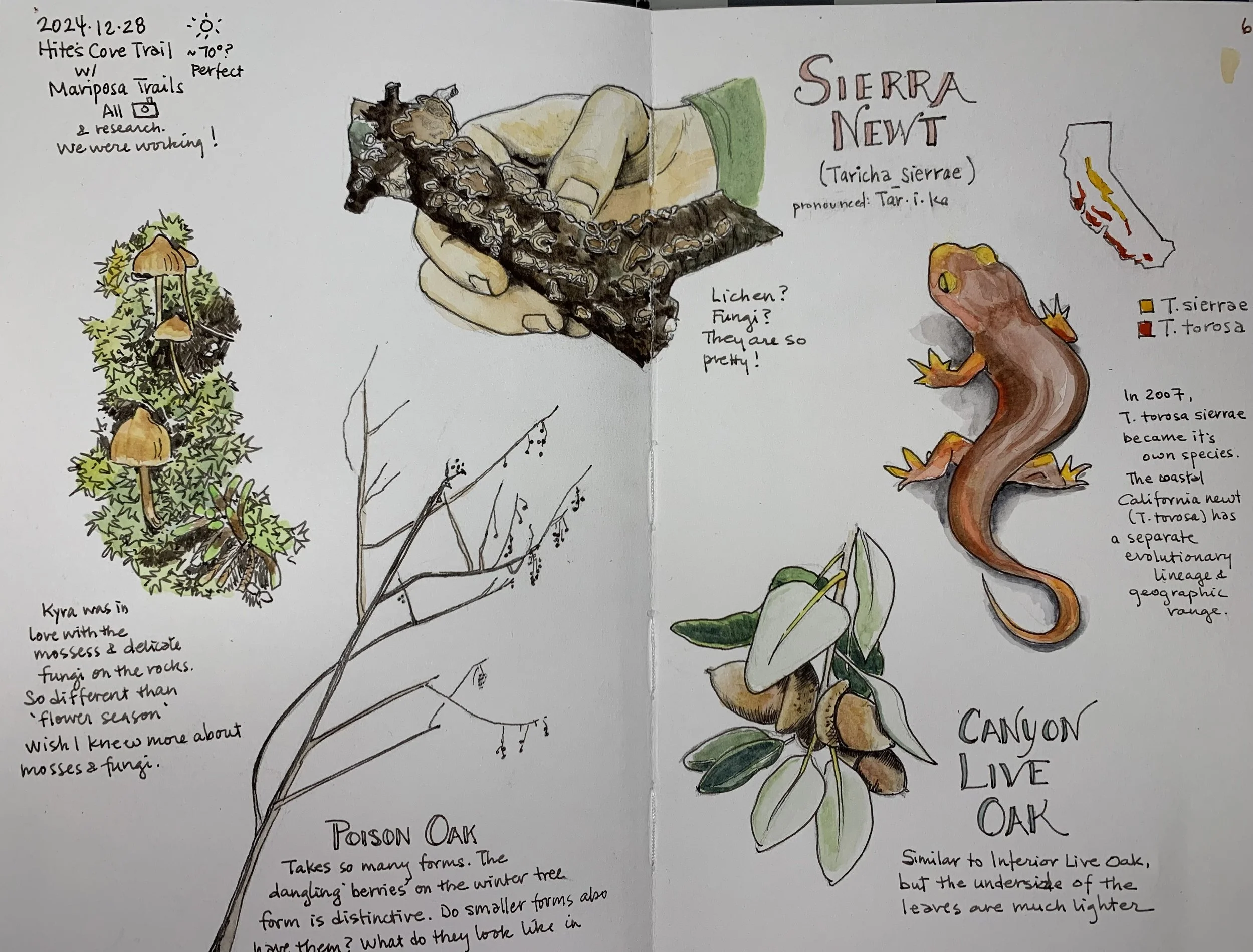
Image provided by Theresa Ho
Information from our senses floods in from every direction, all the time.
More than half of our cortex helps with processing visual information, and when our eyes are open, vision accounts for ⅔ of the electrical activity in our brains. But even when our eyes are closed, we still learn about our surroundings through other senses, like sound, smell, taste, and touch, not to mention our sense of proprioception (the body’s sense of itself), our sense of balance (equilibrioception), and our sense of self. These senses extend beyond the way we typically think of Aristotle’s canonical five.
With so much information coming in, how do we choose what to pay attention to? On one hand, once we begin to safely ignore some inputs, our minds are free to explore other things instead. Selective attention keeps us from falling into overwhelm. But how intentional are we about what we are giving up? Have we considered exactly what we have relegated to “boring” that could be the greatest source of awe in our lives?
UC Berkeley professor and awe researcher, Dacher Keltner, showed that research participants who stood looking up into a campus eucalyptus grove for one minute (just one minute!) were then measurably less egocentric, and were significantly more likely to stop to help someone who dropped a bunch of pens (a staged accident by researchers), compared to participants who stood in a similar area, but looked up at a nearby building. After pausing for just a single minute to contemplate natural beauty, these people were measurably more collaborative and felt less entitled. It’s unbelievable that such a short period of time spent in appreciation of something beautiful could make measurable changes in people’s behavior.
But then, how many of us really pause for a whole 60 seconds to fully appreciate something that we pass on a daily basis?
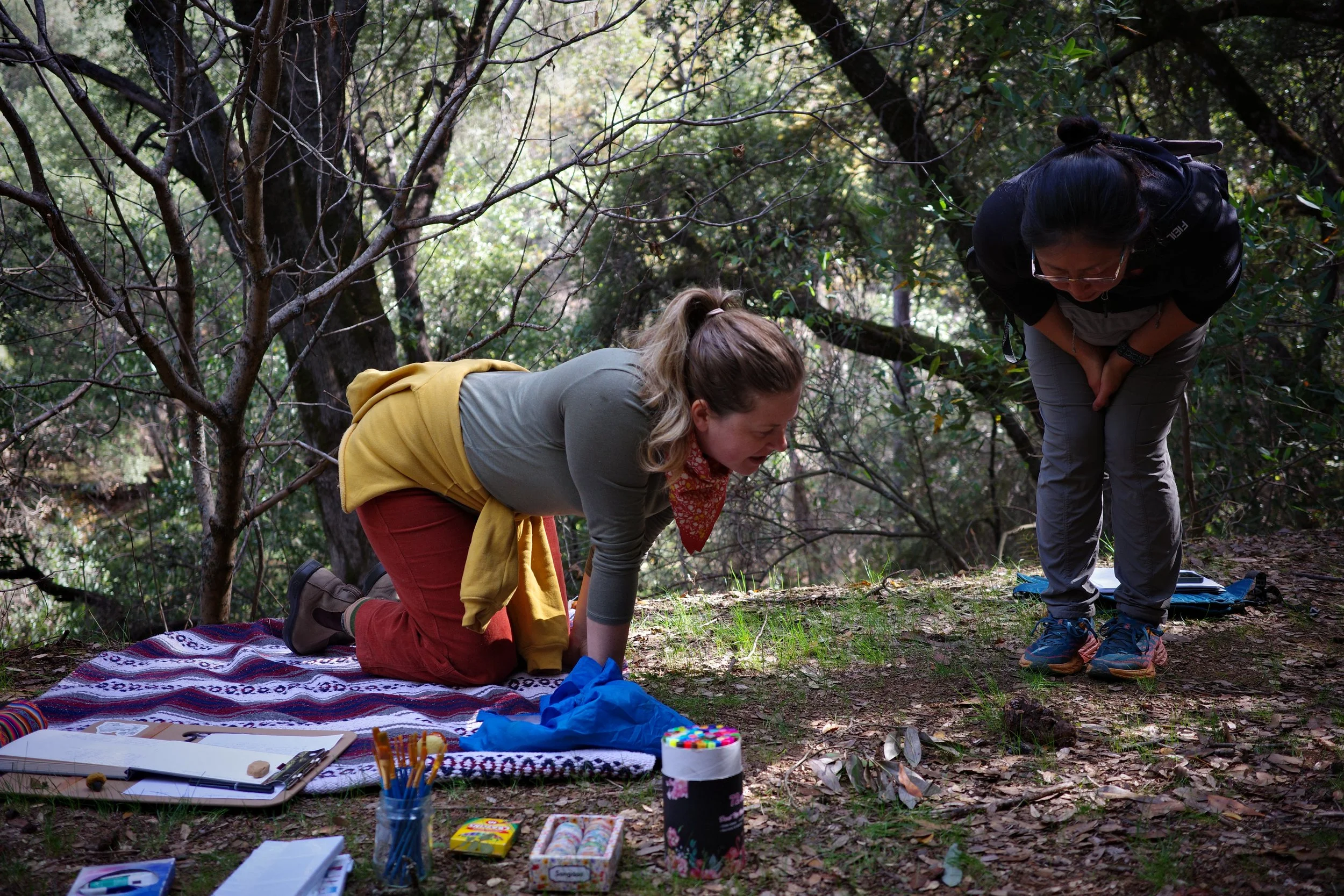
Photo by Martin Klein Schaarsberg
Practicing Attention, Curiosity, and Connection
In the Yosemite area, we are, of course, surrounded by the kind of scenery that draws people from around the world for its awe-inspiring vistas. But we can find awe in smaller ways as well.
John Muir, the famous writer and environmentalist, once noticed, "Storms are fine speakers, and tell all they know, but their voices of lightning, torrent, and rushing wind are much less numerous than the nameless still, small voices too low for human ears; and because we are poor listeners we fail to catch much that is fairly within reach."
How can we go about becoming better “listeners”?
Let’s turn from John Muir to John Muir Laws. Given his name, John Muir Laws (aka Jack) was perhaps destined to be a naturalist, educator, and author. Of his many generous contributions to the nature journaling community, one of my favorites is his framework of three prompts to get the mind flowing:
I Notice
I Wonder
It Reminds Me Of
I love these because they are easy to remember and turn to when you’re plunked down in the middle of some random spot, especially if you’re starting to feel a little bored. Rather than reaching for your phone, take down the filters that limit your attention and start noticing things with all your senses. Move to the second prompt, I wonder, to flex your curiosity. Then let your imagination fly with the third prompt - It Reminds Me Of. Although I don’t get to the third prompt as much as I’d like, I love how wide-ranging, personal, and poetic the responses can be. A tuft of grass waving in the wind becomes the conductor for a symphony, or the buzzing of a bee turns into a magical spell that unlocks a flower-guarded treasure.
These associations also become the space where the external world reflects the internal one. Maybe a tiny sequoia seedling reminds you of all the potential that you hold, or a gnarled tree transports you back to the time when the path in life wasn’t straight and easy, but you found your way anyway.
Follow the prompts, take notes, and voila, you’re nature journaling!
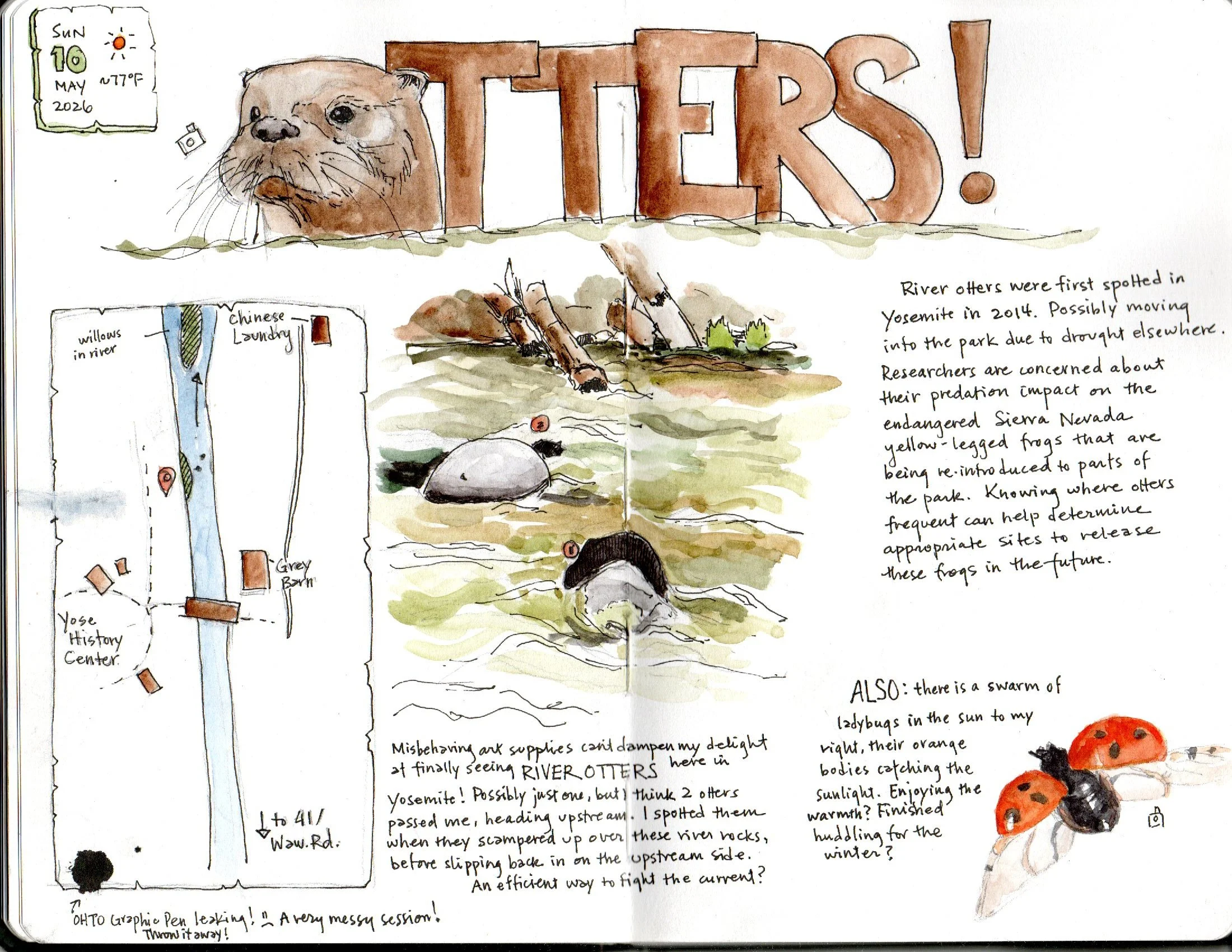
Image provided by Theresa Ho
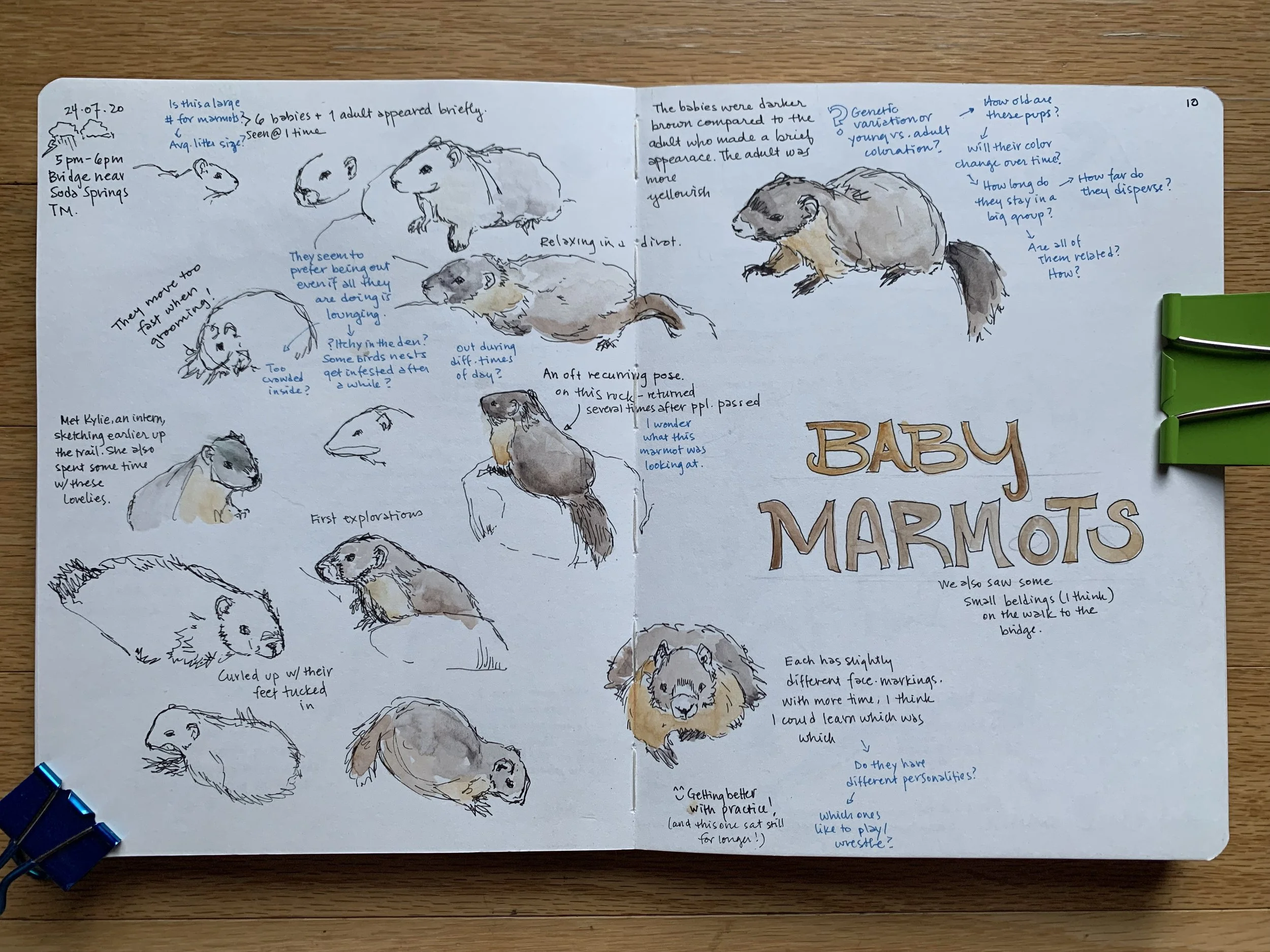
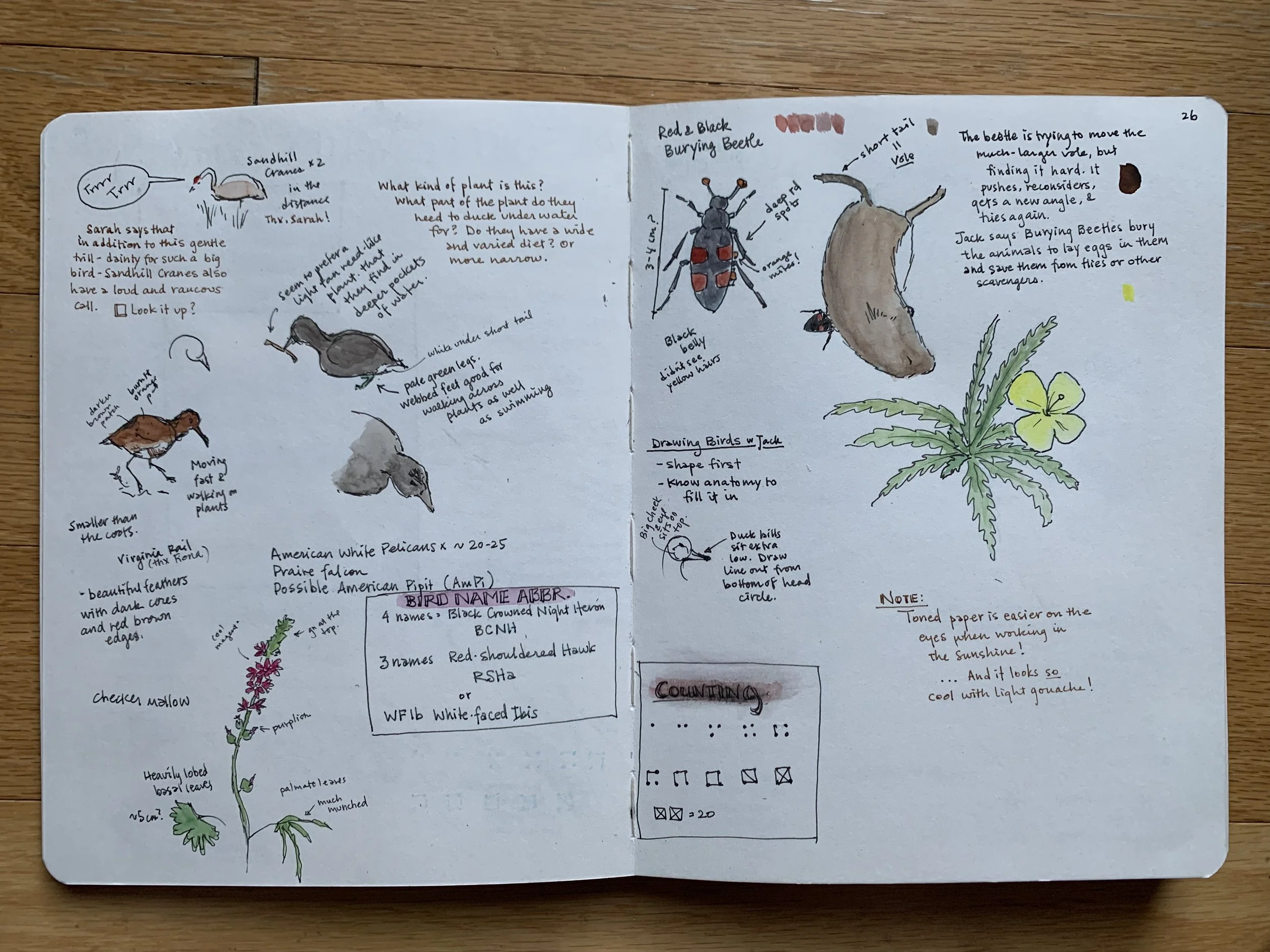
Multiplication of Awe
Of course, you don’t need a nature journal to experience a moment of awe.
However, for me, the act of opening a nature journal to a blank page sets an intention for myself about what I’m going to be doing next. It holds the time open for discoveries as I plan to ‘work’ in my journal. And the act of putting observations and ideas to paper reminds me to stay open to moments of awe.
But it’s more than that.
Once those discoveries and moments of awe are committed to paper, I can return to them again and again, multiplying that experience each time I turn to that page.
Plus, I can further compound the awe by sharing those pages with others.
Look at this amazing thing! Wait - how does that work?
This is part of the reason that nature journaling in community is so rewarding. The energy and enthusiasm build exponentially as each person brings new observations, questions, and connections to everyone’s attention.
Making the World a More Interesting Place
Another side benefit of practicing attention and engagement through nature journaling is that, as long as I have a journal with me, I can entertain myself almost anywhere.
One of my favorite observations from Fiona Gilogly, a nature journaler renowned for her curiosity, is that the more interested you are, the more interesting everything becomes.
What I particularly love about this idea is that we have control of how interesting the things around us are. Yes, we can create new and interesting environments for ourselves, but we can also make things interesting by actively being interested in whatever is around us in the moment.
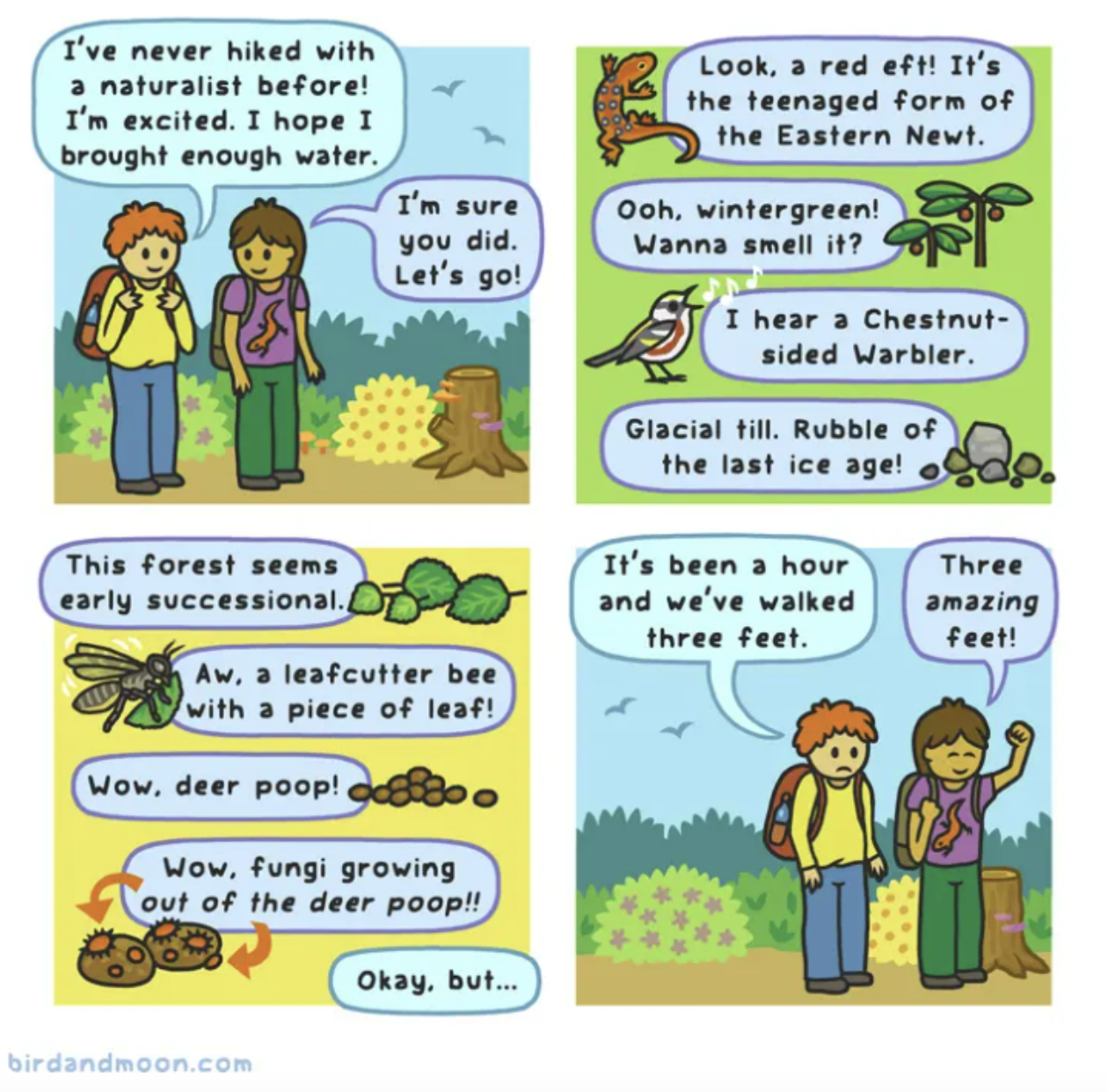
Like the enthusiastic naturalist in Rosemary Mosco’s Naturalist Hike comic (pictured here), you don’t have to go far. There is so much to see right here in the place that you are in.
An Invitation
If any of this tugs at your interest, I’d like to extend an invitation to check out the Yosemite Nature Journaling Group. This free group meets on the first Wednesday of each month, at a mutually agreed-upon location, and also occasionally at other times in different areas in and around the park. Although I try to offer a few prompts at the beginning to get us started, imagine more of a book club than a workshop. I’d love to see you there.
You can find out more about upcoming gatherings at YosemiteNature.org. But regardless of whether you want to nature journal, with others or not, I hope you’ll take a minute - just one - to pause and open your senses to the wonder-filled things around you.
After all, Dacher Keltner suggests that this act alone could make the world a kinder and more generous place.
MEET THERESA
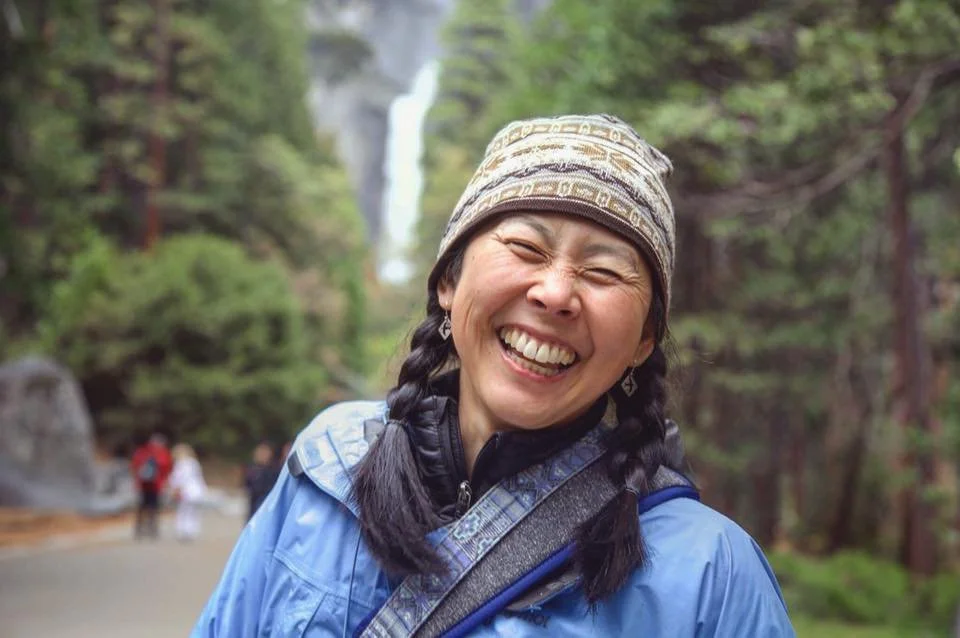
Theresa Ho holds a Ph.D. in Molecular Biology and Neuroscience from the University of California, Berkeley, and has lived in Yosemite for over two decades. Her work in Yosemite spans many jobs, and includes volunteer work with the National Park Service in both Interpretation and Resource Management & Science, alongside a long-standing love of creative expression and learning.
In 2023, Theresa discovered nature journaling, a practice that brought together observation, science, art, and community, and quickly recognized its power. Inspired, she founded the Yosemite Nature Journaling Group, which meets monthly in Yosemite Valley and hosts field-based explorations throughout the park.
Theresa led two wildly successful public art workshops on nature journaling Nov 8 & 9, 2025. During the Art, Nature, & Wellness Program’s immersive cohort in March, 2026, she will offer Nature Journaling & Attention—a day of hands-on observation, drawing, and writing outdoors, exploring how close attention to the natural world can sharpen perception and open new ways of thinking.
Learn more about the Yosemite Nature Journaling Group: yosemitenature.org